Meal PrepPublished 4 November 2026
Streamline Your Prep with a Simple Meal Planning Guide
6 min, 9 partsChoose a few meals to prepare, then make a list of the ingredients you need and what you already have. Pick a prep routine that fits your schedule: cook…
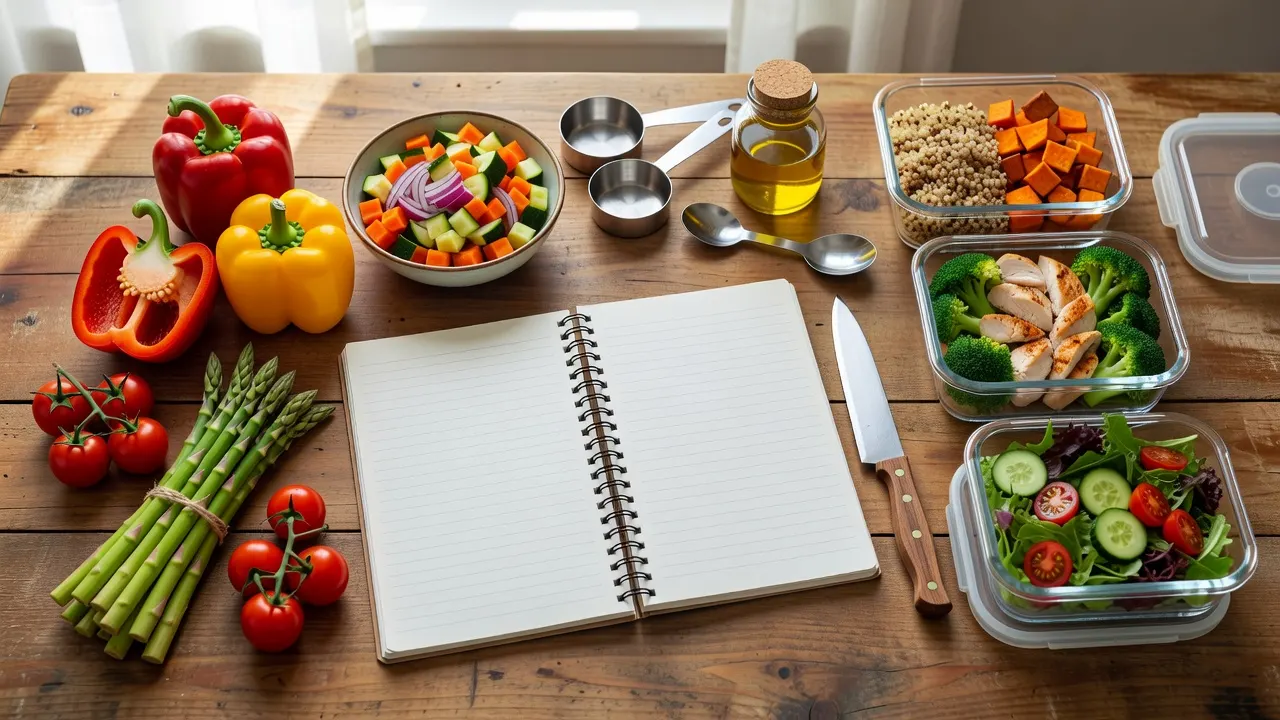
Choose a few meals to prepare, then make a list of the ingredients you need and what you already have. Pick a prep routine that fits your schedule: cook in one session or split the work into smaller sessions. Start with a manageable plan, store portions in suitable containers and adjust as you learn what works for you.
Key facts
- Meal planning starts by choosing which meals you want to prepare.
- A detailed shopping list can be based on your meal plan.
- Before you know it, you ll be a meal prep guide pro, enjoying delicious, healthy meals all week long without the daily stress of cooking.
Build a plan around meals you will use
Begin with the meals that would make your routine easier. Decide which meals you want to prepare ahead, then choose a preparation method that suits your lifestyle. There is no need to fill every day with a new recipe. A short, familiar list can give you a clear starting point.
Write down the meals you intend to make before you start cooking; this lets you organise your time and appliances around the recipes. Keep the plan practical: include dishes you already know how to make, and leave room for simpler choices when the week looks busy.
Check your kitchen before writing a shopping list; you can plan recipes from ingredients you already have, then buy anything needed to complete them. Once you know what is missing, turn the menu into a focused list; this makes shopping follow the plan rather than drive it.
Use a written template or a digital app to collect meal ideas in one place. Keep the layout simple, with space for meals and ingredients. A plan is useful when you can scan it quickly and see what needs attention, rather than when it becomes another complicated task.
Choose a prep routine that fits your week
Pick a time for shopping and preparing food that you can repeat; Knowing when these tasks will happen can help you form a routine. A regular schedule can also make meal preparation easier to maintain. Treat the plan as a guide, not a rigid timetable.
You can set aside one dedicated preparation session or divide the work into smaller sessions. Choose the arrangement that fits your available time and energy. There are meal preparation methods that do not require spending an entire Sunday afternoon in the kitchen.
If you are new to this, begin with a few meals and build up as you become more comfortable. Another beginner-friendly approach is to prepare only a few days of meals at first. Either way, a smaller plan gives you a chance to learn how much preparation feels manageable before committing to more.
Make the cooking sequence work for you. Gather ingredients and decide which tasks can be done together, then follow the list you made for the meals. Having everything ready can make assembling meals quicker. Include straightforward meals or convenience items when they make the plan easier to follow.
Make prepared meals easier to use
Think about how each prepared meal will be served before you portion it. Pre-portioned meals can make it easier to stick with dietary goals. Having prepared meals available can also help reduce portion size and support nutrition goals. Keep portions practical for the way you expect to eat.
Choose containers that suit your storage and serving needs. Glass or airtight meal preparation containers are suggested for keeping prepared food fresh and flavourful for the next day. Label or arrange portions in a way that helps you find the meal you want. The aim is to make the food straightforward to use, not to create more steps.
Leave room to add fresh elements when you serve a prepared meal. Fresh herbs, lemon juice or yoghurt are suggested as ways to brighten prepped food. Keep these additions separate until serving if that suits the dish. This lets you finish the meal simply without turning preparation into an elaborate project.
Review the plan after you have used it. Notice which meals were convenient and which parts of the process felt awkward. Meal preparation can become a simple and enjoyable routine with practice. Use what you learn to adjust your meal choices, shopping list and preparation schedule for the next round.
What this means for you?
If you are a busy household trying to make everyday meals less of a scramble, start with one meal that would genuinely help. Pick something you already enjoy and decide how much of it you want ready ahead. You do not need to redesign every meal at once. A small plan is easier to test and adapt.
For example, you might choose a meal for a day when cooking feels difficult, then check which ingredients are already available. Add only missing items to your list. That keeps the shopping connected to a specific plan and gives you a clear reason for each item. If you discover that a planned dish needs too many steps, swap it for something simpler.
Choose a preparation window that feels realistic. If one long session is unappealing, divide the tasks across smaller moments. You could organise ingredients at one point and cook at another. Keep the plan flexible enough to cope with changing days, and avoid treating every prepared portion as a commitment that cannot change.
When the food is ready, make it easy to identify and serve. Store portions in containers that suit the meals, and keep any finishing touches simple. At the end of the week, use your experience as feedback: keep what helped, change what caused friction and remove anything you did not use. That way, the next plan reflects your real routine rather than an ideal one.
What to do now?
- Choose a small set of meals you want to make ahead. Start with familiar options so you can focus on organising the process rather than learning several recipes at once.
- Check the ingredients you already have. Build your list around the meals, and add only the items you still need.
- Pick a preparation routine that fits your schedule. Decide whether to work in one session or split the tasks into smaller sessions.
- Write down the meals and the order of tasks. Arrange the work so you can use your time and kitchen equipment efficiently.
- Prepare portions and place them in containers suited to the food. Keep serving and finishing simple, with fresh additions ready if they suit the meal.
- After using the plan, note what was convenient and what you would change. Use those observations to make the next plan more practical.
Sources
- mealplanprep.com/meal-prep-guide
- dontwastethecrumbs.com/how-to-plan-for-meal-prep
- www.healthline.com/nutrition/how-to-meal-prep
- www.lazymealprep.com/meal-prep-guide-for-beginners
About this page
Written with AI assistance from the sources listed above, then checked by automated fact, source, repetition and quality checks before publishing.
Facts and links checked on 4 November 2026. Summarises the sources linked above; check the linked source for the latest version.
Products worth considering
- Lavatools Javelin PRO Duo instant-read thermometer (PX1D): Instant-read probe Wirecutter recommends for checking reheated food temperatures. Check price on Amazon
Some links on this page are affiliate links: if you buy through them we may earn a commission, at no extra cost to you. As an Amazon Associate, DYOR Collective Labs earns from qualifying purchases.